


Women of God
Esther ~ “If I Perish, I Perish”
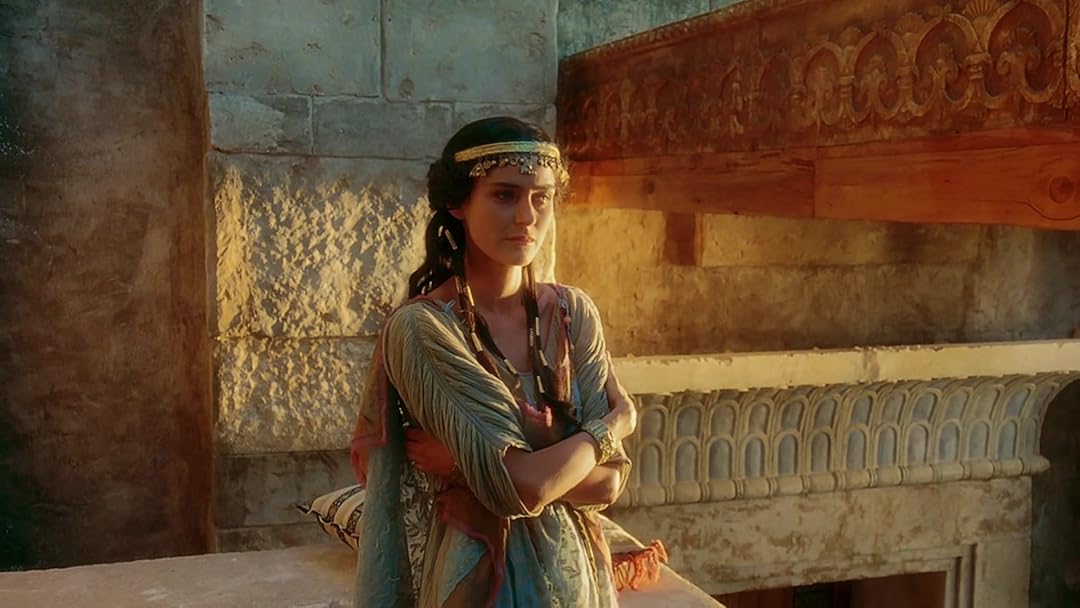
If there’s one thing made abundantly clear through the Book of Esther, it’s that the Lord can use anyone and any circumstance to reveal His glory and to rescue those who are in desperate need of being rescued.
Although Esther’s story is one most everyone has grown up with, her strong faith is not something that should be easily forgotten. So let’s take a look at her character and the circumstances in which she lived.
Esther’s Character
- Esther is a Jewish girl, living in Persia during King Xerxes’ reign.
- She is an orphan living with her cousin, Mordecai, “who had been carried into exile from Jerusalem by Nebuchadnezzar…” (2:6).
- Her Hebrew name is Hadassah, which means ‘myrtle’, like the myrtle plant.
Myrtles are attractive plants, with evergreen leaves, white flowers, and a type of black berry fruit. The plant itself produces a pleasant oil. From biblical times to present times, the myrtle plant has been used as decor (http://ww2.odu.edu/~lmusselm/plant/bible/myrtle.php).
Even Esther’s Hebrew name helps set up her character. Hadassah, “also known as Esther, [is] lovely in form and features” (2:7). Of course, we know that after King Xerxes divorces and banishes Queen Vashti in chapter 1, Esther is taken captive and put into competition with other girls in line to win favor with the king and become queen. Esther would have to hide her nationality and beautify herself for twelve months before even meeting the king (2:12). She begins much like the myrtle plant–a pretty piece of decor, but her bravery in later chapters reveals God had always planned to use her for so much more than a centerpiece.
- Esther maintains self-control and stays humble during her time in the king’s palace. She is entrusted to Hegai, “who had charge of the harem” (2:8). Riches and treasures are right at her fingertips for her to adorn herself with before she is to meet the king. However, when the time comes for her to meet the king for the first time, she only takes the items Hegai suggests for her (2:15).
- Esther’s character is one who is able to find favor with everyone she meets (2:15). So it is certainly no surprise that Esther finds favor with King Xerxes and is made queen in Vashti’s place.
Haman’s Plot of Destruction
It is after Esther becomes queen that her faith is put to the test. In chapter 3, King Xerxes honors a nobleman named Haman, giving him more power than all the other royal officials. The king commands that the royal officials bow down to Haman, but Mordecai, who is a royal official, refuses to bow. He will only bow before the one and only God.
Haman’s character is exactly the opposite from Esther’s–He is greedy, selfish, and spiteful. So spiteful, in fact, that when Mordecai refuses to bow down to him, Haman desires to annihilate every last Jew in Persia–Men, women, and children. He asks the king for permission to destroy the Jews, and Xerxes, oblivious to the fact his own wife is a Jew, tells Haman to “do with the people as [he pleases]” (3:11).
WHAT IS HAMAN’S PLAN?
He orders for the Jews to be:
- Destroyed…
- Killed…
- Annihilated…
All “on a single day” (3:13).
Wow! Scripture could have used one of these words, since they all mean the same thing. But using these three words is not only very telling of Haman’s hatred… Doesn’t this also sound a lot like someone else? That someone being one who comes to “steal, kill, and destroy” (John 10:10)? Who would have loved nothing more than to see the Jews–God’s chosen people–obliterated from the face of the earth? It’s clear from this passage Satan was working behind the scenes, stirring up hatred and murderous desire, most likely in the hopes that in destroying the Jews, Jesus the Messiah would never be born.
**How sweet a thought it is, however, that Satan does not get final say. God’s plans cannot be thwarted. And God’s power is absolute.**
Haman is simply one of Satan’s pawns. Now, let’s see how God uses a Jewish woman, who is only meant to be a pretty queen and to please her king, to help rescue her people from destruction.
Esther’s Circumstances
- Esther learns of Haman’s plan from Mordecai, who urges her to “go into the king’s presence to beg for mercy and plead with him for her people” (4:8).
** The most politically correct response to Mordecai’s pleading would be, “It’s not that simple.” To go into the king’s presence and beg for mercy sounds like the most logical thing to do, so why is this a risk? It’s all because of a law that says “any man or woman who approaches the king in the inner court without being summoned…[will] be put to death” (4:11). That is, unless the king grants mercy by holding out his golden scepter.
- With this in mind, adding to the law that forbids Esther to see her own husband out of her own free will is the fact that she has not been summoned by the king in thirty days (4:11). An entire month has passed since Esther has even seen her husband. What is she to think? Has King Xerxes lost interest in Esther, or has he simply been busy?
- Esther knows her life is in danger if she goes into the presence of the king, but she also knows her people are in danger regardless. Think of the despair, the hopelessness, the fear she must have felt. She is also living during a time when women and Jews and even queens are deemed as lesser than. When Esther becomes queen, she is a prized jewel to be admired, but she most definitely does not get to call the shots.
What in the world could Esther possibly do to help save the Jews? According to Mordecai, the answer is simple:
- Have faith in God.
- Take a risk–even if that risk is a matter of life and death.
Mordecai’s Wisdom
Esther is afraid to go into the king’s presence (4:11-12) and rightfully so. While Mordecai understands this, his awesome faith in God leads him to impart God’s wisdom to Esther in three parts:
- He says to her, “Do not think that because you are in the king’s house you alone of all the Jews will escape” (4:13). After all, Esther is a Jew, and King Xerxes has given Haman permission to kill ALL Jews. Imagine this: What would Xerxes have thought of Esther if she had kept silent and every last Jew had been killed except for her? If her secrecy of being Jewish had been brought to light after the annihilation of all the other Jews, do you think Xerxes would still have considered Esther his most prized possession? Do you think she would still be able to find favor with him?
- Mordecai also says, “If you remain silent at this time, relief and deliverance for the Jews will arise from another place, but you and your father’s family will perish” (4:14). In other words, Mordecai firmly trusts God will not allow His chosen people to be destroyed, and he also believes God has paved the opportunity for Esther to be a vital instrument in God’s will for His people. This is the same kind of faith Abraham has when he is willing to sacrifice his son Isaac to the Lord but also trusts God will provide another sacrifice so Isaac does not have to die.
- Finally, Mordecai says, “And who knows but that you have come to royal position for such a time as this” (4:14)? This is the kind of wisdom we can become frightened of… For such a time as this. It’s easy to say, “Here am I; send me” (Isaiah 6:8). But often times, when the Lord does open a door for us, an unexpected door, a door where we may not know what lies on the other side, the spirit of fear has a tendency to say, “Are You sure this is the door for me, God? Are You sure the timing is right?”
King Xerxes may have chosen Esther for her beauty, but God brings Esther into royal position, because He knows He will be able to use her to save the Jews…for His glory!
Mordecai helps Esther make the right decision: To “walk by faith and not by sight” (II Cor. 5:7). Esther fasts for three days and nights and tells Mordecai she will “go to the king, even though it is against the law”… She says, “And if I perish, I perish” (4:16).
Would God have used another to rescue the Jews if Esther had remained silent? Absolutely. There is no doubt. But how wonderful it is to have such a great story about a brave and humble woman and queen and also a relative like Mordecai, who steers Esther in the right direction.
When the Lord opens an unexpected door for you, I pray you will walk through it with confidence, certain that God’s will is perfect and God’s power is absolute.